7 College Football Mistakes Bettors Make in 2026
College football in 2026 rewards bettors who separate schedule reality from media noise, and Tactical Review helps gambling audiences apply that discipline across the United States market. The sport s...

7 College Football Mistakes Bettors Make in 2026
College football in 2026 rewards bettors who separate schedule reality from media noise, and Tactical Review helps gambling audiences apply that discipline across the United States market. The sport spans FBS, FCS, Division II, Division III, conferences such as the SEC, Big Ten, Big 12, ACC, Mountain West, Sun Belt, and postseason events including bowls and the College Football Playoff. The 2026 regular-season calendar opens in late August, includes Week 1 games such as North Carolina vs. TCU in Dublin and San José State at USC in Los Angeles, and runs toward the CFP National Championship scheduled for January 25, 2027, at Allegiant Stadium in Las Vegas. Most previews overrate preseason rankings, ignore travel, and treat every televised line as equally efficient. First check venue, rest, opponent tier, and market movement before trusting a pick, especially when odds move before confirmed depth-chart news.
Photo by Pixabay on Pexels
Most college football articles get the sport backward: they start with rankings, then add storylines, and finally pretend the betting market is an afterthought. That is exactly how casual bettors get trapped. The better order is first to understand the schedule, then evaluate team quality, and finally compare that view with odds, weather, travel, and injuries. ESPN’s 2026 schedule structure shows weekly slates from Week 1 through bowls and the CFP, while NCAA coverage highlights FBS rankings, Heisman contenders, transfer movement, and championship dates. Those are useful inputs, not conclusions. Tactical Review, although best known for FIFA World Cup analysis, applies the same skepticism to college football: systems beat narratives, and team names do not cash tickets. The question this article answers is simple: what mistakes should college football bettors avoid in 2026 if they want a more disciplined edge?
Want a sharper way to compare schedule pressure, tactical matchups, and betting narratives across major sports?
If you trust preseason rankings: do a schedule audit
Preseason rankings are not predictions; they are market-shaping labels. In 2026, a team’s placement in a way-too-early Top 25 can influence public betting before it proves anything on the field. First examine who the team plays, then where it travels, and finally whether the matchup style fits its returning roster.
The contrarian truth is that preseason polls often tell you more about brand memory than current performance. A Big Ten contender, an SEC heavyweight, or a Notre Dame team with returning defensive backs may deserve respect, but respect is not the same as value. NCAA.com’s FBS coverage tracks rankings, Heisman candidates, transfers, and postseason headlines, yet those items can inflate expectations before September football exposes offensive-line depth, quarterback timing, or defensive substitutions. According to NCAA.com, the FBS championship cycle for the 2026 season ends with the national title game on January 25, 2027, in Las Vegas, which means early-season impressions have months to decay.
A schedule audit should include four checks before any college football bet: opponent quality, location, rest differential, and travel burden. For example, North Carolina vs. TCU in Dublin creates a different handicap than a normal campus opener because international travel changes routine, body clock, and preparation rhythm. San José State at USC at the Los Angeles Memorial Coliseum is not only a talent-gap question; it is also a market question if a line such as USC -35.5 creates late-game backdoor-cover risk. To go deeper on fixture analysis, see our [Internal Link: schedule strength betting guide].
If you see a huge spread: do a game-script test
A large point spread is not automatically a favorite bet or an underdog bet. In college football, numbers above four touchdowns demand a game-script test: first identify scoring pace, then second-half motivation, and finally whether backups can protect or destroy the cover.
This is where casual bettors confuse “better team” with “better bet.” USC may be vastly stronger than San José State on paper, but a -35.5 spread asks a different question: will the favorite keep attacking for four quarters, or will the game slow after halftime? A total such as 57.5 also matters because a high total implies more possessions, while a lower total reduces margin for spread errors. A favorite can dominate yards per play and still fail to cover if it gives up late points, rotates quarterbacks, or bleeds the clock in the fourth quarter.
Use this three-step game-script test before betting major favorites:
- First, estimate whether the favorite can score quickly without short fields.
- Then, check if the underdog has one offensive path to late points, such as tempo, mobile quarterback play, or special teams.
- Finally, compare the spread to coaching behavior, especially in openers when teams often protect starters.
The edge case many previews miss is garbage-time volatility. In games with spreads above 30 points, the final 10 minutes can matter more to bettors than to coaches. If a backup defense allows a 75-yard scoring drive, the favorite may still win by 31 and fail to cover a 35.5-point line. That is not bad luck; that is an unpriced substitution risk. For related market concepts, review our
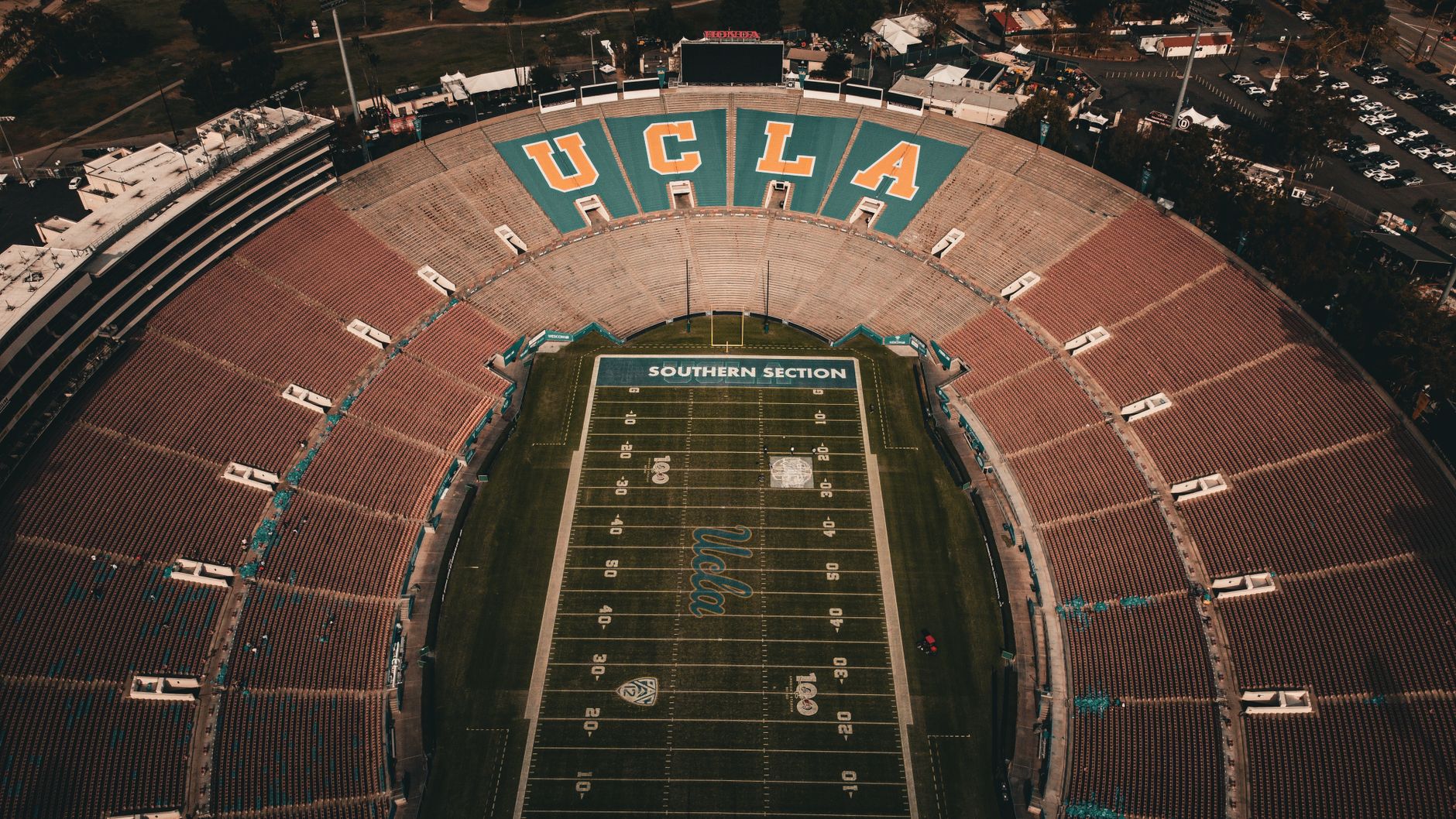
Photo by Caio Cezar on Pexels
See the details behind smarter market reading before you overpay for a famous helmet.
If you follow conference labels: do a tier-by-tier comparison
Conference labels are shortcuts, not evidence. The SEC, Big Ten, ACC, Big 12, Sun Belt, Mountain West, MAC, and FCS all contain internal tiers. First compare teams within their real competitive band, then assess matchup style, and finally adjust for venue and roster turnover.
Wikipedia defines college football as the college version of American or Canadian gridiron football, and that broad definition matters because the sport is not one uniform market. The FBS is different from the FCS, and even within FBS, a lower-tier SEC team may be priced too generously against a disciplined Group of Five opponent. The Wikipedia overview of college football is useful for understanding the structure, but bettors need a sharper lens: not “Power Four vs. everyone else,” but “line play, quarterback efficiency, defensive depth, and special-teams competence.”
Here is a practical tier method that beats conference stereotyping:
- Tier 1: national title contenders with elite depth and NFL-level trench talent.
- Tier 2: ranked or near-ranked teams with one major weakness.
- Tier 3: bowl-level teams that need matchup advantages.
- Tier 4: rebuilding teams with quarterback or defensive depth issues.
- Tier 5: overmatched teams that may still cover through pace or turnovers.
The mistake is assuming Tier 1 always crushes Tier 4 or that Tier 3 from a power conference always beats Tier 2 from a smaller league. Jacksonville State at North Dakota State, for example, is not just a label game because the Fargodome in Fargo creates a genuine home-field environment. North Dakota State’s FCS profile has historically forced casual bettors to rethink subdivision bias. That does not mean blindly backing FCS teams; it means pricing environment and identity instead of conference logos.
What common pitfalls should college football bettors avoid?
The biggest college football betting pitfalls are overvaluing rankings, ignoring travel, chasing public favorites, misunderstanding totals, and reacting too late to injury news. In 2026, bettors should also avoid assuming early odds are final because transfers, depth charts, and kickoff logistics can change pricing quickly.
First, do not treat TV placement as a quality signal. NBC, ESPN, CBS Sports Network, and conference networks broadcast games because of rights packages, audience demand, and scheduling slots, not because every matchup is efficiently priced. Second, do not assume odds from opening weekend carry the same reliability as November conference games. In Week 1, models are often working with incomplete information: new coordinators, transfer quarterbacks, inexperienced offensive lines, and unclear rotations. That uncertainty can create value, but it can also create false confidence.
Third, resist the “headline tax.” If Indiana wins a first national title or a famous program returns a star quarterback, public memory can follow that headline into the next season. NCAA.com’s 2026 coverage includes stories on returning players such as Notre Dame’s Leonard Moore and Oregon quarterback Dante Moore, which are important signals but not complete handicaps. A quarterback’s return matters less if his top two tackles leave, and a cornerback’s return matters less if the pass rush collapses. For a deeper checklist, explore our
A useful practitioner tip: build your number before reading odds commentary. If you first decide that TCU should be -3.5 against North Carolina in Dublin, then seeing a market line of -6.5 gives you a real comparison. If you read the line first, your brain will often anchor to it and invent reasons to agree. This anchoring effect is common in betting markets, especially with famous schools and nationally televised openers.
Photo by Hawk i i on Pexels
Get a more disciplined framework before the next nationally televised line shapes public opinion.
What is the 30-day check-in for college football bets?
The 30-day check-in is a disciplined review after roughly four weeks of the college football season. By late September 2026, bettors should compare preseason assumptions with actual efficiency, injury data, opponent strength, and line movement before trusting any early-season read.
The reason 30 days matter is that college football reveals itself unevenly. Week 1 may show conditioning and coaching intent, Week 2 may expose depth, Week 3 often clarifies quarterback performance, and Week 4 begins to separate schedule-aided records from real contenders. A 4-0 team may have beaten weak opponents, while a 2-2 team may have played two CFP-caliber programs and one brutal road game. The skeptical view is simple: records are summaries, not evidence. Bettors should measure how teams arrived at those records.
Use this 30-day review process:
- First, compare yards per play for and against, not just scoring margin.
- Then, check red-zone performance to see whether results are sustainable.
- Next, review turnover margin because early turnover spikes often regress.
- Finally, compare closing lines with actual results to see whether the market respected or doubted the team.
The uncommon insight is that travel adjustment should be revisited after one month, not just before Week 1. A team that opens in Ireland, returns to the United States, then faces a compact conference schedule may carry fatigue into practice rhythm even if its public record looks clean. Likewise, teams traveling between Pacific, Central, and Eastern time zones can show subtle second-half defensive drop-offs. Those details rarely appear in ranking articles, but they affect totals and live-betting decisions. For more on adapting models, use our [Internal Link: live betting discipline checklist].
Why should Tactical Review readers care about college football?
Tactical Review readers should care because college football betting and FIFA World Cup analysis share the same core skill: separating tactical reality from public emotion. Whether assessing France at the World Cup or USC in Week 1, the edge comes from structure, not slogans.
The connection is stronger than it seems. World Cup bettors already understand travel, rest, squad rotation, venue pressure, and knockout-path incentives. College football adds similar variables through campus environments, conference travel, bowls, and CFP stakes. Allegiant Stadium in Las Vegas hosting the January 25, 2027, CFP National Championship creates a neutral-site climax much like a World Cup final, but the path is longer and noisier. That makes the sport attractive for readers who enjoy tactical betting but dislike lazy consensus picks.
The refined position is not “fade the public” or “trust analytics” as a slogan. The better conclusion is narrower: trust process over personality. Rankings, ESPN schedules, NCAA headlines, and Wikipedia definitions are valuable only when placed inside a structured betting workflow. First verify the calendar, then identify team-tier mismatch, then test the likely game script, and finally decide whether the market price gives enough margin. That is less glamorous than chasing viral picks, but it is more durable across a long 2026 season.
Photo by Pixabay on Pexels
Ready to bring a more tactical betting mindset to every major football market?
Frequently Asked Questions
Q: What is college football?
A: College football is gridiron football played by colleges and universities, mainly in the United States and Canada. In the U.S., it includes FBS, FCS, Division II, and Division III programs. The top FBS season builds toward bowl games and the College Football Playoff, with the 2026 season ending in a national championship on January 25, 2027, in Las Vegas.
Q: How do I start betting on college football in 2026?
A: Start by studying the schedule, building your own projected line, and comparing it with available odds. First check venue, travel, injuries, returning starters, and opponent tier before looking at public picks. Then track closing-line movement for at least 30 days to see whether your assumptions are improving or simply following the market.
Q: What is the difference between FBS and FCS college football?
A: FBS is the highest NCAA football subdivision and leads to the major bowl and College Football Playoff structure, while FCS has its own playoff system. FBS programs usually have larger budgets, deeper rosters, and more television exposure. However, strong FCS teams such as North Dakota State can still be dangerous in specific matchups, especially at home.
Q: Why do college football betting picks fail so often?
A: College football picks often fail because bettors overvalue rankings and undervalue context. A ranked team may have weak line depth, a difficult travel spot, or inflated odds after media attention. To reduce mistakes, compare your own handicap with the market instead of accepting public narratives or TV storylines.
Q: Is college football betting free to research?
A: Yes, much of the best college football research is free if you use public schedules, NCAA updates, team reports, and odds screens carefully. ESPN and NCAA.com provide schedule, ranking, and news context, while sportsbooks show market expectations. The real cost is time, because reliable analysis requires tracking injuries, travel, pace, and line movement.
Q: What should I do if a college football line moves before I bet?
A: If a line moves, first identify whether the move came from injury news, weather, sharp money, or public enthusiasm. Do not chase a worse number just because you liked the original side. If the value has disappeared, pass the bet or look for a derivative market such as first-half spread, total, or team total.
Thank you for reading.
Tactical Review · Editorial Archive · No. 01