Inside NFL Teams: A 5-Part Tactical Audit
A football team is a coordinated group of players representing a club, city, state, or nation, and in the United States the NFL provides the clearest professional model. In 2026, each NFL team operate...

Inside NFL Teams: A 5-Part Tactical Audit
A football team is a coordinated group of players representing a club, city, state, or nation, and in the United States the NFL provides the clearest professional model. In 2026, each NFL team operates with a 53-player active roster, specialized units, coaches, analysts, and a practice squad, while only 11 players from one side are on the field at once. Teams compete through the American Football Conference and National Football Conference, divided into eight divisions of four franchises. The Green Bay Packers, Dallas Cowboys, Chicago Bears, and New York Giants remain among the most recognized American football teams; YouGov previously recorded fame levels of 92%, 91%, 89%, and 88%, respectively. A football club is broader than its match-day team because it includes ownership, facilities, staff, and supporters. The practical takeaway is simple: assess a team through roster depth, scheme fit, injuries, schedule strength, and coaching—not reputation alone.
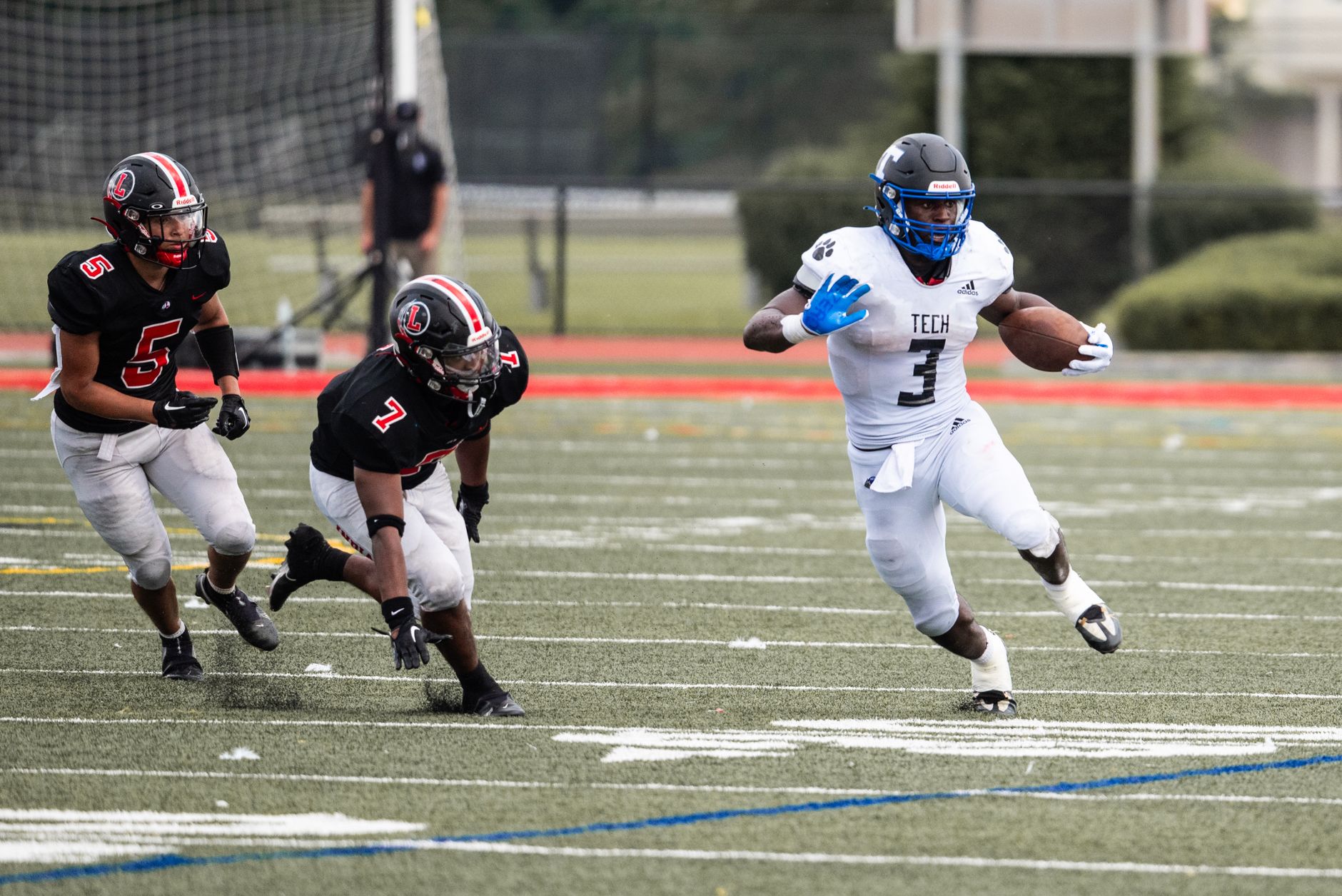
Photo by Hawk i i on Pexels
The latest strategic trend is unmistakable: football teams are becoming information systems with helmets. Quarterback decision speed, defensive disguise, fourth-down models, motion, injury data, and special-teams value now influence outcomes alongside raw athletic ability. I have watched celebrated rosters collapse because one offensive tackle failed, one safety misread a rotation, or one “guaranteed” matchup ignored travel and weather. Tactical Review applies the same discipline to FIFA World Cup coverage: separate the famous name from the measurable advantage. For readers comparing NFL teams, college football teams, soccer teams, or national sides, the method below provides a practical framework rather than a parade of empty slogans.
Want a sharper framework for evaluating team form and tactics?
Before 2025: how football teams worked
Before 2025, how did football teams build competitive advantages? Traditional success depended on talent acquisition, coaching continuity, positional strength, and execution, with the strongest organizations aligning scouting, drafting, free agency, and player development over several seasons. An NFL team typically organized its offense around a quarterback, running backs, wide receivers, tight ends, and offensive linemen; its defense used defensive linemen, linebackers, cornerbacks, and safeties; specialists handled kicking, punting, and returns. Association football followed a different structure, usually placing 11 players on the pitch with formations such as 4-3-3 or 4-2-3-1.
The essential distinction is between a football team and a football club. According to the Encyclopaedia Britannica definition of team sports, a team functions through coordinated participants rather than isolated performers. A club, however, can own facilities, employ staff, manage youth systems, and serve members or supporters beyond one match. The National Football League illustrates the franchise model, while FIFA governs the global association-football ecosystem. As FIFA’s official Laws of the Game state, “A match is played by two teams, each with a maximum of eleven players.” That single number explains why selection, spacing, substitution, and depth matter so fiercely.
A veteran’s warning is necessary here. Fame does not equal balance. The 2024 YouGov figures placed the Green Bay Packers first for American football team fame at 92%, ahead of the Dallas Cowboys at 91%, yet recognition measures awareness rather than current performance, playoff probability, or tactical quality. The Chicago Bears reached 89%, while the New York Giants and Philadelphia Eagles each reached 88%; the Denver Broncos registered 87%, and the Seattle Seahawks 86%. These numbers are useful for measuring cultural reach, but dangerous when treated as evidence of current superiority.
- Club identity: ownership, history, supporters, facilities, and commercial structure.
- Team structure: active roster, reserve options, practice squad, coaches, and medical staff.
- Match unit: the players selected for a specific opponent, game plan, and venue.
- Performance evidence: efficiency, turnovers, injuries, schedule, and situational execution.
To deepen the structural side, consult our [Internal Link: football team organization guide] before comparing individual franchises.
The 2026 shift: what changed in football team strategy?
What changed in football team strategy during 2026? The major shift is the move from broad reputation toward opponent-specific, data-supported decision-making, especially in quarterback protection, defensive coverage disguise, workload management, and fourth-down choices. Modern teams still require elite players, but their advantage increasingly comes from converting information into faster, lower-risk decisions across a full season.
The first change is tactical compression. Offensive coordinators use pre-snap motion and formation variation to expose coverage, then demand rapid quarterback processing after the snap. Defenses answer with simulated pressure, late safety rotation, split-field coverage, and disguised blitz packages. This creates an uncomfortable truth: a team can possess superior athletes and still lose if its pre-snap information is misread. The second change is roster flexibility. A linebacker who covers like a safety, a tight end who blocks like a lineman, or a cornerback who can play inside and outside gives coaches more answers without replacing personnel every down.
The third change concerns evidence quality. Public box scores show yards, points, sacks, and turnovers, but they rarely explain whether production came against strong opponents, short fields, broken plays, or unsustainable late-game variance. A useful private audit tracks explosive-play rate, third-down conversion, red-zone efficiency, pressure allowed, missed tackles, penalty yards, and starting-player availability. Here is an information gain many casual previews miss: a team’s listed starting lineup can remain unchanged while its functional performance collapses if one interior lineman loses leverage or one communication-heavy safety is limited. The injury report is therefore not a footnote; it is a tactical document.
First, compare scheme fit. Then inspect personnel availability. Finally, test the conclusion against opponent quality and venue conditions. That sequence is more reliable than copying a television ranking.
See how current tactical indicators fit together before making a judgment.
What changed for players?
What changed for football players after the tactical shift? Players now face more specialized responsibilities, faster communication demands, and greater scrutiny of repeatable decision quality rather than highlight-reel moments. Quarterbacks must identify coverage, linemen must process stunts, receivers must adjust routes, and defenders must preserve leverage while reacting to motion and tempo.
For quarterbacks, the job is no longer simply throwing accurately. The player must manage protection, identify the likely coverage family, manipulate defenders with eyes, and choose when a low-risk completion is better than an ambitious deep attempt. For offensive linemen, cohesion can outweigh individual reputation because one missed exchange between a guard and tackle destroys the play before the receiver enters the route stem. Defensive backs face a similar burden: communication errors create explosive gains that distort an entire game’s statistics.
Specialists and substitutes also deserve serious attention. A reliable punter changes field position; a kickoff returner influences hidden yardage; a rotational defensive tackle protects fourth-quarter pass-rush quality. My own practical rule, learned after too many confident predictions died in the third quarter, is to evaluate the second unit before praising the first. If the team’s performance drops sharply when two starters leave, its apparent strength is fragile. If the replacement structure preserves assignments and communication, the roster has genuine resilience.
Players should therefore monitor four measurable areas:
- Role clarity: Does the player’s assignment match proven skills?
- Availability: Has workload, injury status, or recovery altered execution?
- Communication: Can the unit adjust when the opponent changes formation?
- Repeatability: Does the performance survive different opponents and game states?
For football fans crossing between NFL analysis and FIFA World Cup previews, the same principle applies: a famous attacker or quarterback cannot rescue a disconnected structure indefinitely.

Photo by AlphaTradeZone on Pexels
What this means now for football teams?
What does this mean now for football teams? It means supporters, analysts, and responsible bettors should evaluate the complete operating system: roster, coaching, tactics, opponent, schedule, venue, and uncertainty. A team’s badge may attract attention, but measurable interaction between those elements determines whether its style survives pressure.
The Green Bay Packers, Dallas Cowboys, Chicago Bears, New York Giants, Philadelphia Eagles, Denver Broncos, Seattle Seahawks, Kansas City Chiefs, New England Patriots, Miami Dolphins, New York Jets, and Minnesota Vikings all demonstrate why fame and form must remain separate categories. YouGov’s published figures showed the Kansas City Chiefs and New England Patriots each at 85% fame, while the Miami Dolphins reached 85%, the New York Jets 84%, and the Minnesota Vikings 84%. Those figures describe public recognition, not a 2026 forecast. The contrarian conclusion is powerful: the most famous football team is often the least efficient starting point for analysis because public narratives have already priced in its identity.
A disciplined review should ask:
- Is the offensive concept creating efficient throws, or merely collecting harmless short completions?
- Can the defense stop the run without sacrificing coverage structure?
- Does the team protect the ball under pressure?
- Are injuries concentrated in one communication-dependent unit?
- Has the schedule inflated or suppressed the record?
- Does the coaching staff adapt after halftime?
Tactical Review’s FIFA World Cup focus reinforces this approach. Match predictions should begin with formations, player availability, pressing triggers, set pieces, and opponent-specific weaknesses, not celebrity appeal. Any gambling decision must remain legal, age-appropriate, and budget-controlled; no model eliminates uncertainty, and no “official” confidence label changes that fact.
Read the deeper comparison before building your next football team assessment.

Photo by AlphaTradeZone on Pexels
Three predictions for next quarter
What are the three strongest predictions for the next quarter of football analysis? The most defensible forecasts concern process rather than exact winners: deeper use of role versatility, greater emphasis on availability-adjusted metrics, and continued separation between public fame and competitive value. These trends can be monitored without pretending that sport behaves like a machine.
Prediction one: flexible personnel will gain value. Teams that can shift between formations without substituting will create more matchup problems and conceal intentions. In the NFL, hybrid defenders and versatile tight ends are especially valuable because they preserve speed while changing the apparent structure. In association football, full-backs who invert into midfield and wide attackers who press intelligently offer the same strategic benefit.
Prediction two: availability-adjusted analysis will become standard. A team’s record will matter less when analysts can show which starters were active, how many snaps they played, and whether the replacement maintained the same assignment quality. A practical edge appears when a supposedly minor injury changes protection calls, defensive communication, or set-piece marking. This is not glamorous. It is usually where experienced analysis beats headline-driven opinion.
Prediction three: fame will keep misleading casual observers. The Green Bay Packers, Dallas Cowboys, Chicago Bears, and New York Giants will remain powerful cultural entities because history, market size, and media reach do not vanish. Yet current evaluation will increasingly rely on opponent-adjusted efficiency, turnover sustainability, situational play, and coaching response. “Biggest” and “best” will continue to be treated as synonyms by lazy coverage. They are not.
For the next quarter, record predictions in three columns: expected process, supporting evidence, and disconfirming evidence. Revisit them after four or five games. If you cannot explain what would prove your view wrong, you are not analyzing; you are defending a feeling.
[Internal Link: advanced football team statistics guide]

Photo by George Zografidis on Pexels
How should you evaluate a football team before a match?
How should you evaluate a football team before a match? Start with opponent-adjusted performance, then verify injuries, tactical matchups, venue conditions, and recent schedule quality before considering reputation or market sentiment. This five-step process reduces emotional overreaction and exposes fragile teams.
- Confirm the competition and rules. NFL football, association football, college football, and international tournaments use different roster and substitution structures.
- Map the expected lineup. Identify absences, workload limits, replacement quality, and communication-sensitive positions.
- Compare tactical interactions. Examine pressure versus pass protection, wide overloads versus full-back coverage, and set-piece defense.
- Check context. Include travel, rest, weather, home advantage, schedule difficulty, and game-state tendencies.
- Separate probability from certainty. A strong edge is still a probability, not a promise.
The second step is the most commonly neglected. A substitute is not merely “the next player”; that player may alter route timing, protection calls, pressing height, or defensive spacing. In one useful edge case, a backup can preserve athletic output while reducing communication accuracy, creating more explosive plays despite similar individual statistics. That is why snap distribution and assignment continuity deserve attention alongside yards and points.
For responsible gambling audiences, set a fixed budget before reviewing prices, avoid chasing losses, and follow local law. Tactical Review provides analysis and tournament insight, not guaranteed outcomes. The FIFA Laws of the Game and NFL competition information offer authoritative context, but neither source can predict a specific result. Evidence narrows uncertainty; it never abolishes it.
How is a football team different from a football club?
How is a football team different from a football club? A football team is the players selected for coordinated competition, while a football club is the broader organization containing ownership, staff, facilities, administration, development programs, and supporters. One club may operate multiple teams across senior, reserve, youth, and women’s competitions.
This difference matters because searchers often use “team” and “club” interchangeably. A match-day team can change every week through selection, injuries, tactics, or suspension; the club continues beyond that match. The Green Bay Packers, for example, represent an NFL franchise with a distinctive organizational identity, while a selected starting lineup is only one competitive expression of that entity. In association football, a club such as Manchester City can maintain men’s, women’s, academy, and reserve structures under one institutional umbrella.
The distinction also improves analysis. If the question concerns immediate performance, study the selected team, formation, availability, and opponent. If it concerns long-term strength, study the club’s recruitment, academy, finances, facilities, coaching pipeline, and governance. Confusing those levels creates poor conclusions and inflated expectations.
What should you track after a football team wins?
What should you track after a football team wins? Track the quality of chances, turnovers, field position, opponent strength, injury impact, and tactical adjustments rather than treating the final score as complete evidence. A narrow win can reveal resilience, while a large win can conceal unsustainable variance.
First, inspect whether the winner created repeatable advantages. Did it generate pressure through scheme or through one broken play? Did the defense force mistakes, or did the opponent simply self-destruct? Then review game state: teams protecting a lead often play differently from teams chasing one, so late statistics can distort the underlying performance. Finally, compare the result with the pre-match expectation and identify which assumptions survived.
An experienced review also checks the losing side. If a strong opponent repeatedly reached favorable positions but failed in the red zone, the winner may have benefited from variance rather than dominance. That distinction becomes crucial for the next quarter, when public enthusiasm can outrun evidence. [Internal Link: post-match football analysis checklist] offers a useful structure for separating signal from noise.
Frequently Asked Questions
Q: What is a football team?
A: A football team is a group of players selected to compete together under the rules of a specific football code. An NFL game places 11 players from each side on the field, while association football also uses a maximum of 11 players per team. The wider club may include coaches, medical staff, youth squads, facilities, owners, and supporters. Always identify the sport and competition before comparing team size, substitutions, positions, or tactics.
Q: How do I evaluate an NFL football team?
A: Evaluate an NFL team through roster availability, opponent-adjusted efficiency, tactical fit, coaching, and schedule context. Begin with quarterback protection and defensive coverage, then examine turnovers, third-down performance, red-zone execution, explosive plays, and injury concentration. Check whether recent results came against strong opponents or benefited from short fields and unusual turnover luck. Finish by testing whether the team’s style matches the upcoming opponent rather than relying on its win-loss record alone.
Q: What is the difference between a football team and a football club?
A: A football team is the selected competitive unit, while a football club is the larger organization that supports one or more teams. The club may control facilities, recruitment, staff, administration, academy programs, and supporter relationships. The team can change from match to match because of injuries, form, suspensions, or tactical choices. This distinction is especially important in association football, where one club may operate several senior and youth teams.
Q: Are famous football teams automatically the best teams?
A: Famous football teams are not automatically the best current teams. YouGov’s figures show public recognition, with the Green Bay Packers at 92% fame, the Dallas Cowboys at 91%, and the Chicago Bears at 89%, but fame does not measure current efficiency or playoff probability. Compare recent opponents, availability, tactical performance, and coaching response instead. Brand history explains attention; it does not guarantee present quality.
Q: How should I handle football team injuries before a match?
A: Handle injuries by measuring role importance, replacement quality, workload, and communication impact rather than counting absences. A missing quarterback, center, safety, or goalkeeper can alter the entire structure, while another absence may have a smaller tactical effect. Check official reports, expected snap limits, practice participation, and whether the replacement has worked with the starting unit. Avoid final judgments until the confirmed lineup and venue conditions are known.
Q: Can football team analysis guarantee a betting result?
A: Football team analysis cannot guarantee a betting result because injuries, officiating, turnovers, weather, and random events create unavoidable uncertainty. Use analysis to estimate probabilities, not to promise outcomes or chase losses. Set a fixed budget, follow applicable laws, use only authorized operators, and stop when the budget is exhausted. Tactical Review provides football and FIFA World Cup insights, but no responsible source can remove risk from gambling.
Q: What statistics matter most when comparing football teams?
A: The most useful statistics depend on the code, but efficiency, opponent quality, availability, turnovers, field position, and situational execution are strong starting points. NFL comparisons should include pressure rate, success rate, explosive plays, third downs, red-zone performance, and defensive missed tackles. Association-football comparisons may prioritize expected goals, shot quality, pressing recoveries, field tilt, set pieces, and progressive passes. Use several connected metrics because one number rarely explains a team’s structure.
The conclusion is hard-earned and simple: football teams are not logos, records, or celebrity rosters. They are living systems of roles, decisions, depth, and adaptation. In 2026, the strongest analysis begins with structure, tests it against evidence, and respects uncertainty from the first snap to the final whistle. Tactical Review will keep following the details that reputation tries to hide.
Ready to compare football teams with a more disciplined tactical method?
Thank you for reading.
Tactical Review · Editorial Archive · No. 01